


Why do people suddenly want things the moment they become hard to get?
A café becomes popular because only a few people know about it.
A shoe becomes desirable because it’s limited edition.
A music artist feels “better” before they become mainstream.
Even people themselves sometimes become more attractive when they seem slightly unavailable.
None of this is random. A surprising amount of what teenagers call “cool” is actually economics.
Not economics in the boring textbook sense.
But economics in the sense of scarcity, supply and demand, social capital, and perceived value.
The modern teenage social world behaves a lot like a market. And once you notice it, you start seeing economic principles everywhere.
Scarcity Creates Desire
One of the most important ideas in economics is scarcity. Scarcity simply means:
something is limited. And humans consistently assign more value to things that are difficult to obtain.
This explains why:
- limited sneakers sell out instantly
- exclusive cafés suddenly become trendy
- underground artists feel more interesting
- invitation-only events feel exciting
Part of the appeal comes from the product itself. But a huge part comes from scarcity. If everyone could instantly access something, it would often lose part of its social value. That’s why trends often become “uncool” the moment they become too common. The coolness was partially tied to exclusivity all along.
Supply, Demand, and Social Trends
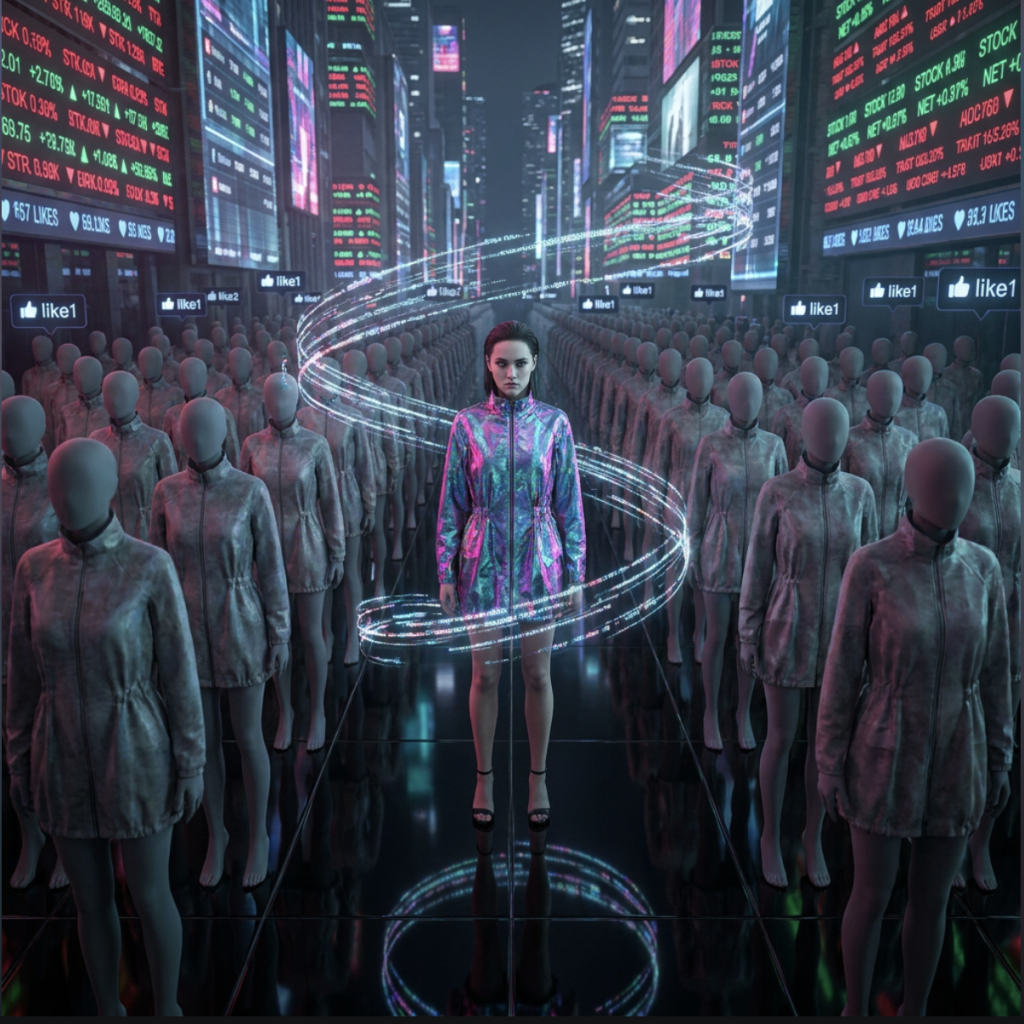
Trends work surprisingly similarly to markets.
When demand for something rises quickly: prices increase, visibility increases, more people want it
This creates a feedback loop. For example:
A niche fashion style becomes popular on TikTok.
More people begin wearing it.
Brands start producing it everywhere.
Suddenly the market becomes oversaturated.
And then something interesting happens:
people lose interest.
Economically, this is partially because scarcity disappears. Socially, this is because trends function as identity markers.
Once everybody adopts something, it stops distinguishing people. Which is why trends today rise and die so quickly. The internet accelerates the entire cycle.
Veblen Goods: Why Expensive Things Become More Desirable
Normally in economics, when prices increase, demand falls. But some products behave differently. These are called Veblen goods.
With Veblen goods:
higher prices can actually increase desirability.
Why? Because the high price itself becomes a status symbol.
Luxury brands work this way. Part of the value is not just quality, functionality, usefulness. It’s signaling.
Owning expensive things signals: wealth, exclusivity, status. And teenagers are far more exposed to status signaling than most people realise.
Even in schools, people subconsciously notice phones, shoes, vacations, cafés, and brands.
Not always because they care deeply about the objects themselves — but because objects communicate social information. Consumption becomes communication.
Social Capital: The Currency That Isn’t Money
Some forms of value are social rather than financial. Economists and sociologists often call this social capital.
Social capital includes things like influence, reputation, popularity, connections, and social trust.
In high school, social capital can matter almost as much as money. For example:
- knowing the “right” people
- being socially recognizable
- having strong networks
- being seen as interesting
all carry value inside social environments.
And interestingly, people often trade economic capital for social capital. Buying expensive concert tickets, trendy clothes, or aesthetic experiences is sometimes less about personal enjoyment and more about gaining social positioning.This doesn’t mean people are fake. It just means humans naturally care about status within groups and status has always functioned like a form of currency.
The Economics of “Good Taste”
One of the strangest modern trends is how much value people place on having “good taste.”
Music taste. Film taste. Fashion taste. Book taste. Café taste. But taste itself functions economically too.
Why? Because taste creates distinction.
Knowing niche films or underground music signals cultural awareness, individuality, sophistication.
In economics, this overlaps with signaling theory. Signaling theory explains how people use visible choices to communicate invisible qualities.
For example:
Listening to obscure jazz might signal intellectualism.
Reading literary fiction might signal depth.
Watching certain films might signal artistic taste.
Whether those signals are accurate is a separate question. But socially, the signals still function. And social media amplified this dramatically. Now taste itself is publicly displayed constantly.
Playlists.
Pinterest boards.
Instagram dumps.
Identity increasingly operates through visible consumption.
Why “Low Effort Cool” Exists
One of the most interesting social phenomena among teenagers is that trying too hard often becomes uncool.
Why? Because effort changes perceived status.
People who appear effortless, naturally talented, and casually stylish often seem higher status than people visibly seeking approval.
Economically, this connects to signaling again. If someone acts desperate for validation, it signals lower social confidence. But if someone appears selective or relaxed, it signals abundance. And in economics, abundance usually signals higher value. Ironically, this is why people often hide how much effort they actually put into:
- appearance
- studying
- social media
- hobbies
Effort exists.But visible effort can reduce perceived “coolness.”
The Attention Economy Changed Everything
Modern coolness is also shaped by attention economics. Today, attention itself functions like a scarce resource and social media platforms are designed around competing for it.
Which means things like aesthetics matter more, identity becomes performative, trends accelerate faster, and people constantly optimise visibility.
Algorithms reward novelty. So internet culture constantly searches for new aesthetics, new microtrends, new personalities, new identities
And because millions of people now participate in the same online environment, trends oversaturate faster than ever before. This is why cultural cycles feel so short now. The internet compresses trend lifespans.
The Quiet Truth About Coolness
Most people think coolness is natural. But a huge part of coolness is actually constructed socially and economically.
Things become desirable because they’re scarce, they signal status, they communicate identity, they attract attention, and they differentiate people socially. And once you understand that, you start realising something strange:
Coolness often has less to do with the object itself…
and more to do with what the object represents.
The Bottom Line
The modern teenage world behaves surprisingly like an economy.
Attention acts like currency.
Scarcity creates desirability.
Status functions like capital.
Taste becomes signaling.
And “cool” is rarely just about personal preference. It’s usually a mix of economics, psychology, identity, and social behavior all interacting at once. Which is why trends can feel irrational from the outside — while making perfect sense once you understand the incentives underneath them.


