


Part of Inktrove’s “I Picked My Subjects. Now What?” series
“PCM kyun li?”
“Maths mein achhe marks aaye the.”
“Mere saare friends le rahe the.”
“Kyunki sab lete hain.”
And somewhere in the room: “Mujhe actually Physics pasand hai.”
Same classroom. Same three subjects. Very different reasons for being there.
Maybe you loved solving equations. Maybe your marksheet arrived and the family announced “Science!” before you’d finished checking your total. Or maybe your friends were taking PCM, and choosing your future felt slightly less terrifying when you could at least choose your bench partner.
None of these makes you foolish. At fifteen or sixteen, you’re making a decision while everyone around you has an opinion—and you haven’t had much chance to discover what different kinds of work actually feel like.
But now you’re here. Physics, Chemistry and Maths are on the timetable.
What comes next?
“Maths mein achhe marks aaye the.”
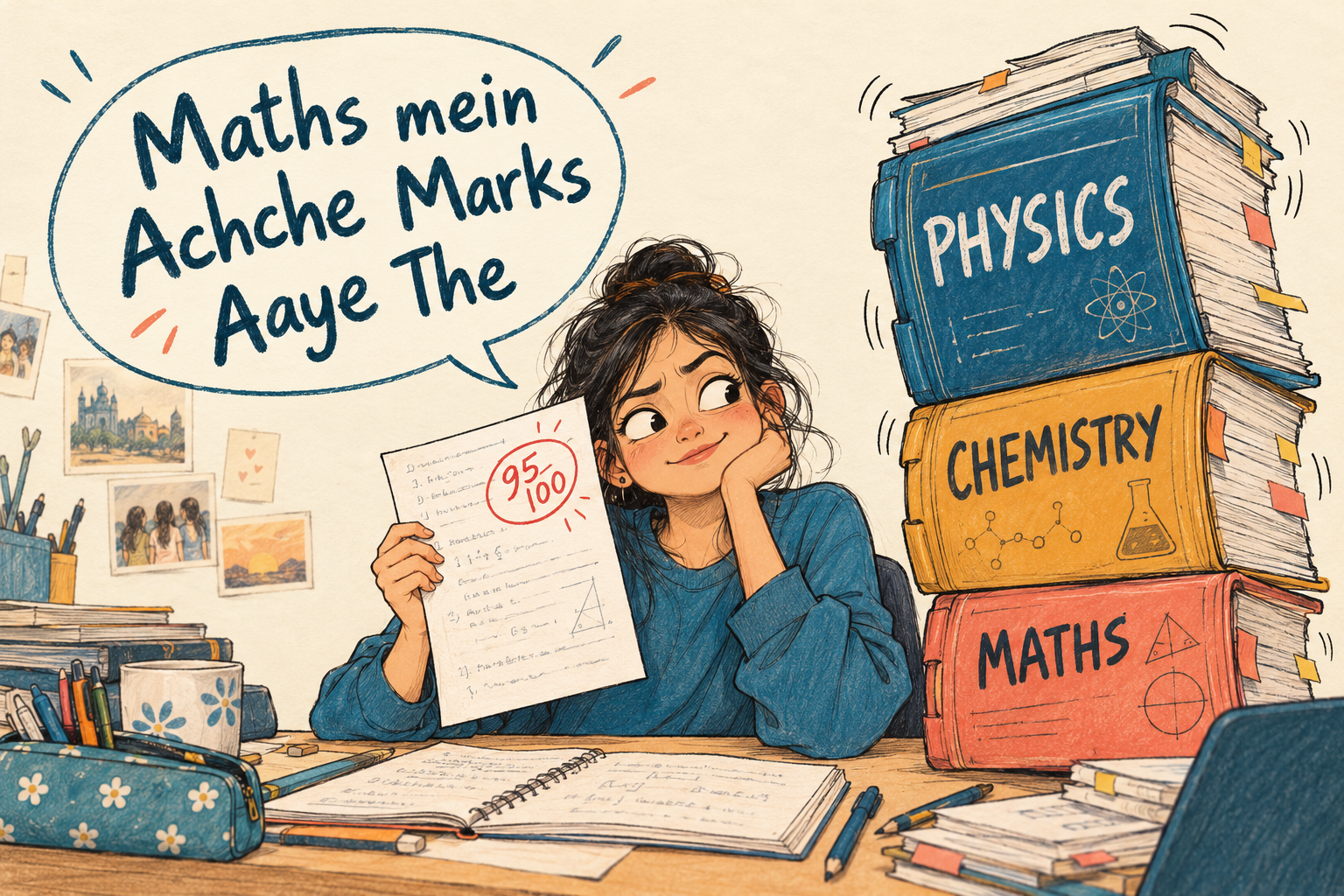
Fair enough. Doing well in something is a reasonable reason to keep studying it.
But pause for a moment: what did you enjoy about Maths?
Was it figuring out an unfamiliar problem? Understanding why a formula worked? Spotting patterns? Or the satisfaction of practising a method until you could reliably get the right answer?
Those are different sources of satisfaction. And “I’m good at Maths” gives you more to explore than a single career label.
If patterns and evidence interest you, try exploring statistics and data. If you enjoy abstract questions, look more closely at mathematics. If you like turning logic into something that works, give programming a try.
These are actual study routes. The Indian Statistical Institute, for example, offers undergraduate programmes in mathematics, statistics and statistical data science.
Before you start imagining yourself as a data scientist, though, try something smaller. Take cricket statistics, music charts or a week of your own screen-time data. Ask a question, make a chart and see whether you enjoy investigating the answer.
You might discover that you like finding patterns. You might discover that spreadsheets make you want to leave the room.
Both discoveries are useful.
“Kyunki sab lete hain.”
Sometimes “everyone” means your three closest friends, one cousin and the neighbour who keeps mentioning IIT.
Their certainty can make PCM feel like the default. Choosing anything else suddenly seems to require a PowerPoint presentation.
If that sounds familiar, there’s no need to spend the next two years defending your original decision. Start collecting information about yourself now.
Notice what holds your attention when marks aren’t involved. Do you like fixing things? Making something look and work better? Explaining difficult ideas? Investigating why something happened?
You don’t need an impressive answer. “I spent an hour trying to improve our school event’s registration form” is a more useful clue than “I want a successful career.”
Try one small task connected to that curiosity. Sketch a better version of an everyday object. Build a basic webpage. Explain a scientific idea to a younger student.
Then ask: did I enjoy doing it enough to want another attempt?
A friend’s enthusiasm can introduce you to something. Your own experience helps you decide whether to continue.
“Mujhe actually Physics pasand hai.”
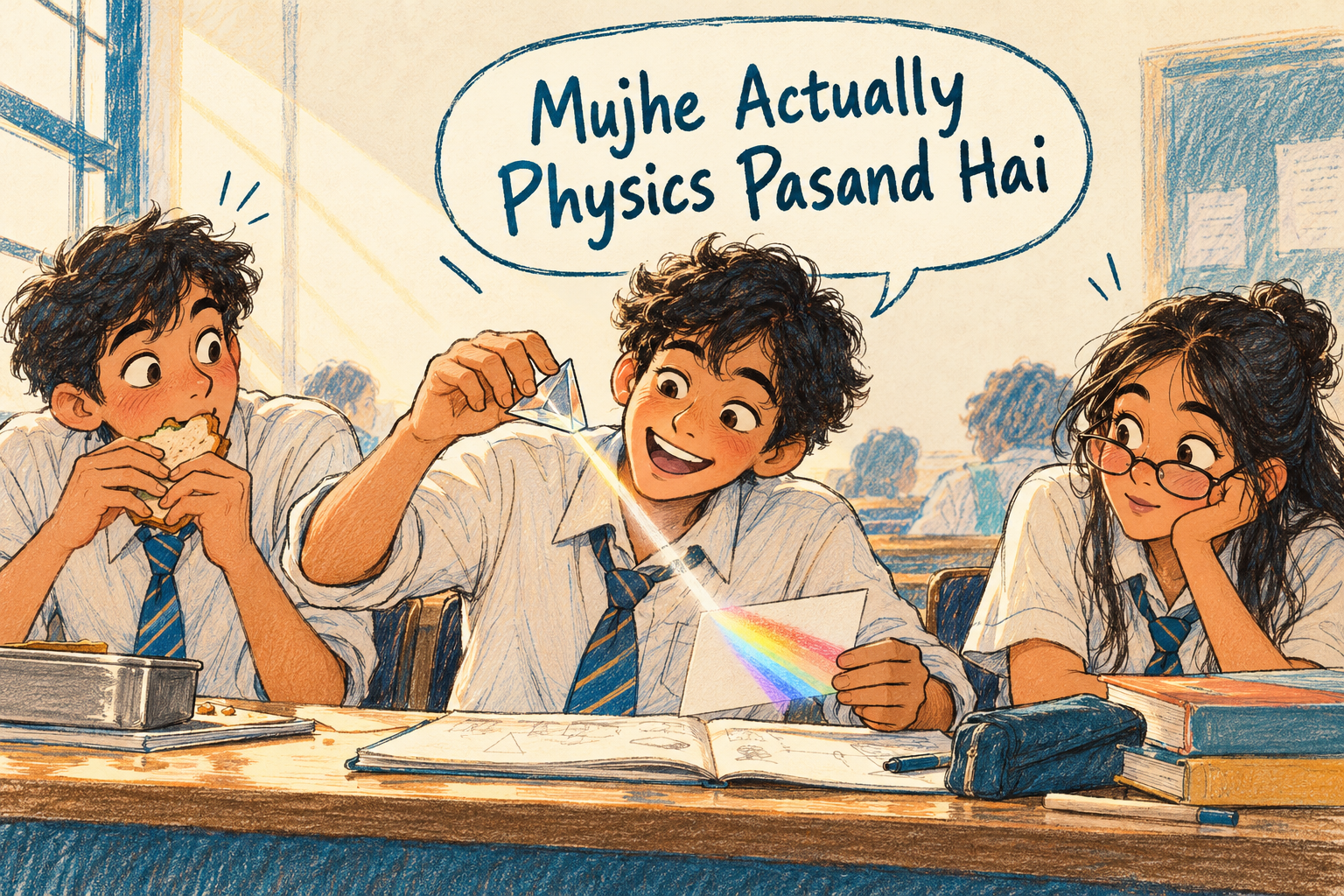
Excellent. Now get more specific.
Perhaps you like understanding how the universe works. Perhaps you want to build machines. Perhaps you enjoy experiments—or keep wondering how a phone manages to do everything except survive a fall from your bed.
Engineering deserves serious exploration if designing, building and improving systems appeals to you. Look inside the branches: the work involved in software, electronics and civil engineering can be very different.
Science and research are also worth exploring. IISERs, for example, offer science study and research pathways for which PCM students can be eligible, subject to programme and admission requirements.
Try a beginner simulation, a small project or an introductory university lecture. Pay attention to your response when it becomes difficult.
You won’t enjoy every minute. But do you want to understand what went wrong and try again?
That curiosity is worth noticing.
And what if your interests lead somewhere unexpected?
You might discover that you’re more interested in how people use a product than in its circuitry. Design could become worth investigating. PCM students can apply to participating B.Des programmes through UCEED, although eligibility depends on the institute and admission year.
The practical step is to check actual course content and requirements. A course name alone tells you surprisingly little about how you’ll spend your days.
For any path that interests you, find out what students study, what beginners actually do and what qualifications you need. Ask someone in the field: “What takes up most of your working week?”
The answer may be less glamorous than the job title. It will probably be more helpful.
You don’t have to leave this article with a career decided.
Choose two possibilities. Look inside them. Try something small.
“Maths mein achhe marks aaye the” may explain how you arrived in this classroom.
What you discover next can help you decide where to go from it.


