Home Blog Page 2

The Stream Lie: Why Your Class 11 Decision Feels Bigger Than It Actually Is

Somewhere between your last Class 10 board exam and the day your results come out, something strange happens.
Your entire life suddenly becomes a multiple-choice question. Science. Commerce. Humanities. Three boxes. Pick one.

Teachers ask. Parents ask. Relatives who haven’t spoken to you in six years suddenly ask.
And the implication is always the same:

Choose carefully. This decides your future.

But here’s the uncomfortable truth most students slowly discover sometime in Class 11:
The stream decision is important. The mythology around it is wildly exaggerated.


The Real Hierarchy No One Admits Exists

In theory, all streams are equal.
In reality, most Indian schools operate on an unspoken ranking system.

  1. Science
  2. Commerce
  3. Humanities

You can see it everywhere.

The highest cutoff marks go to Science.
The “top students” are pushed toward PCM or PCB.
Humanities often becomes the place students end up after someone says: “Beta, maybe Science is not your thing.”

The problem isn’t that Science is difficult. It is. The problem is the assumption that difficulty equals superiority.


The “Smart Kid Pipeline”

If you scored well in Class 10, chances are you’ve already heard some version of this sentence:

“With your marks, you should take Science.”

Notice the logic there.
Not interest.
Not curiosity.
Not future goals.

Just marks.

High marks → Science.

This pipeline pushes thousands of students into streams they don’t actually enjoy, simply because doing otherwise feels like wasting potential.
Ironically, the result is often the opposite: burnout.


The Strange Thing About CBSE Flexibility

Here’s something many students don’t realize.
CBSE actually allows interdisciplinary learning far more than schools admit.
In theory, combinations like these are completely possible:

  • Economics + Mathematics + Political Science
  • Psychology + Biology
  • Computer Science + Business Studies

The problem? Many schools don’t facilitate these combinations.

Sometimes it’s timetable logistics.
Sometimes it’s tradition.
Sometimes it’s simply easier to keep streams rigid.

But the idea that streams are three sealed boxes isn’t entirely true anymore. It’s just the system most schools still follow.


The Factors That Actually Matter (But No One Talks About)

1. What kind of thinking you enjoy

Some students love solving problems with one correct answer. Others love arguments, theories, and interpretation.

Neither approach is smarter. But forcing yourself into the wrong thinking style for two years can feel like swimming upstream every day.


2. The subjects you can tolerate studying at 11PM

This sounds oddly specific, but it’s a good test. Every stream eventually leads to late nights before exams.
When that moment arrives, which subjects would you rather be staring at?

Physics equations.
Economic graphs.
Political theory.

Your answer matters more than most people realize.


3. Whether you’re choosing something — or escaping something

A lot of stream decisions are actually avoidance decisions.

Students take Commerce to escape Physics.
Students take Humanities to escape Math.
Students take Science to avoid disappointing people.

None of these are great reasons.
Choosing a stream works best when you’re running toward curiosity, not away from discomfort.


The Part Adults Rarely Mention

Here’s the quiet truth about most careers. Very few of them stay inside one stream forever.

Economics uses mathematics. Psychology overlaps with biology. Business increasingly relies on data science.

The real world is interdisciplinary, even if school timetables aren’t. Which is why your Class 11 stream isn’t a life sentence.
It’s just the first academic direction you explore seriously.


The Bottom Line

Choosing a stream in Class 11 feels like a huge moment because everyone treats it like one. But the real mistake isn’t choosing the “wrong” stream.

The real mistake is choosing one for the wrong reasons.

Not for prestige.
Not because everyone else is doing it.
Not because your marks say you “should.”

Choose the subjects that make you curious enough to keep going when things get difficult. Because difficulty will show up in every stream anyway.

The only difference is whether you’re struggling through something you care about — or something you never wanted to study in the first place.
After the Last Paper: The Strange Split Every 10th and 12th Grader Feels.

0

The last board exam rarely ends with a big moment. You walk out of the exam hall.
Someone asks, “How was the paper?”
A few people talk about the difficult questions.

Then everyone slowly leaves.

For months, life revolved around these exams. Timetables, revision plans, group chats full of panic before every paper.
And suddenly… it’s over.

At first it feels like freedom.
But a few days later, another feeling quietly appears.
Something has ended.


The Class 10 Split

For students finishing Class 10, this is the first time school life starts to divide.
For years, everyone moved through school together. Same subjects, same classrooms, same timetable.
Then streams enter the picture. Science. Commerce. Humanities. What looks like an academic choice on paper often becomes something more emotional.
Friend groups that spent years sitting together suddenly scatter into different sections. Some students move to new schools entirely.

No one announces it, but the routine that once felt permanent begins to split into different paths.


The Class 12 Departure

For Class 12 students, the feeling is even stronger.
After the final board exam, school doesn’t just change.
It ends.

Some students will move to different cities.
Some will prepare for entrance exams.
Some will leave for universities abroad.

The classrooms that once felt ordinary suddenly become places you may never experience in the same way again.
And that realisation often arrives quietly, days or weeks after the last paper.


The Emotion Nobody Talks About

Many students feel a strange mix of emotions during this time.
Relief from exams.
Excitement about the future.
But also an unexpected sense of nostalgia.
You start thinking about small things that once felt completely normal.
The friend who saved you a seat every day.
The chaos before surprise tests. The group discussions that somehow turned into jokes instead of studying.

At the time, these moments felt routine. Sometimes even annoying.
Now they feel strangely meaningful.
And that’s completely normal.


The Pressure to “Move On Quickly”

There’s another reality many students face immediately after boards. Preparation begins again.

For Class 10 students, coaching institutes often start JEE, NEET, or CUET preparation almost immediately.
For Class 12 students, entrance exams, applications, and career decisions take over.

The pressure to jump into the next phase instantly can make students feel like they don’t have time to process the change that just happened. But transitions like this are a natural part of growing up.

Feeling nostalgic about a phase of life doesn’t mean you’re stuck in the past. It simply means that phase mattered.


How to Navigate This Summer

Instead of rushing into the next race immediately, the weeks after boards can actually become one of the most valuable breaks students get.
A few simple things can help make this transition easier:

Reconnect with people.
Meet friends outside the pressure of exams. Conversations without stress often become the memories you remember later.

Do something unrelated to academics.
Read something interesting, learn a new skill, travel with family, or explore a hobby that school never gave time for.

Give yourself time to reflect.
You don’t need to have your entire future figured out right now.

This summer exists between two important phases of life. It’s okay to treat it like a pause.


The Quiet Truth About These Transitions

Class 10 and Class 12 are often described as milestones. But milestones don’t always feel dramatic when they happen. Sometimes they just feel like an ordinary day that slowly becomes meaningful in hindsight.

Years later, many students don’t remember their exact board exam scores. But they remember the people they studied with. They remember the routines they complained about. And they remember the strange feeling of standing between one chapter ending and another beginning.

If you’re feeling that right now, you’re not alone. It’s simply what the end of a chapter feels like.

Why Everyone Pretends They Don’t Care About Dating (But Everyone Does)

0

Somewhere around the middle of high school, a strange contradiction appears in almost every teenage social circle. Everyone insists they don’t care about dating.

“Relationships are a distraction.”
“I’m focusing on studies.”
“I don’t have time for that.”

And yet, the same people who say this somehow know exactly who likes whom, who is texting whom, and who sat next to whom during the last school event. It’s one of the most quietly obvious truths of teenage life:

Most teenagers pretend they don’t care about dating, while secretly being fascinated by it.


The Academic Reputation Problem

Part of the reason is the way ambition is framed in schools. Students who care about academics often feel like they have to maintain a certain image of seriousness. Talking openly about crushes or relationships can feel like it contradicts that image.

So a strange rule emerges: You can discuss marks, coaching classes, entrance exams, internships, even global politics.

But admitting you like someone? That suddenly feels like a confession. The result is a culture where curiosity about relationships is normal, but open conversation about it isn’t.


The “Distraction” Narrative

Teenagers constantly hear the same message from adults:

“Focus on studies.”
“Don’t get distracted.”
“Relationships can wait.”

There’s some truth in that advice. School is a time when academic choices matter. But the unintended side effect is that any interest in relationships becomes framed as irresponsible. Which is odd, because developing feelings for people is not a rebellious activity. It’s a normal human experience.

Pretending it doesn’t exist doesn’t actually make it disappear. It just makes everyone talk about it indirectly instead of honestly.


The Quiet Reality of Teenage Curiosity

What most teenagers are actually experiencing isn’t dramatic “dating culture.” It’s something much simpler.

Curiosity.

Curiosity about how relationships work.
Curiosity about attraction.
Curiosity about emotions that suddenly feel new and confusing.

These experiences are part of growing up in every culture, every generation, and every school system. The difference is whether people treat them as something natural, or something that must be hidden behind jokes and denials.


The Problem With Pretending

When something normal becomes taboo, two things happen.
First, conversations move underground — into rumours, assumptions, and awkward speculation.Second, teenagers are left to figure things out without open discussion or perspective.

Ironically, the very thing adults hope to prevent — emotional confusion — becomes more likely when the topic itself becomes uncomfortable to talk about.


A Healthier Way to Think About It

Interest in relationships doesn’t mean abandoning your priorities.

Teenagers can care about studies, ambitions, and their futures while also acknowledging that emotions and attraction are part of life.

These things are not opposites.

Pretending that serious students must be completely indifferent to relationships creates an unnecessary contradiction — one that most teenagers quietly ignore anyway.


The Bottom Line

The strange culture of “pretending not to care” exists mostly because everyone believes they are the only one thinking about it.

In reality, almost everyone is navigating similar questions about emotions, friendships, and attraction.

Talking about these experiences thoughtfully doesn’t make teenagers less focused.

If anything, it makes the conversation around growing up a little more honest.

And honesty, after all, is a much healthier starting point than pretending.

The Vibe Shift of 2026: Off-Shoulders, Digicams, and the Death of Labubus

Every year has a certain vibe.
Not a single trend — more like a collection of small cultural shifts that slowly show up everywhere: in outfits, Instagram posts, the music people are playing in cars, even the way people talk online.
Halfway through 2026, a few patterns are becoming impossible to ignore.
And together, they tell a story about what teenage culture looks like right now.


The Rise of the Off-Shoulder Era

If you’ve opened Instagram in the last few months, you’ve probably noticed it.
Suddenly, off-shoulder tops are everywhere.
Not in the overly styled, influencer way. More in the casual “this somehow works with everything” way.
There’s something interesting about this trend. For a long time, teen fashion leaned heavily toward either oversized streetwear or extremely minimal basics.
The off-shoulder comeback sits somewhere in between — relaxed, slightly dramatic, but still effortless.
It feels like fashion is slowly moving away from hyper-curated outfits toward things that feel a little more spontaneous.


The Return of the Digital Camera

One of the most surprising trends of 2026 isn’t clothing at all.
It’s the digital camera.
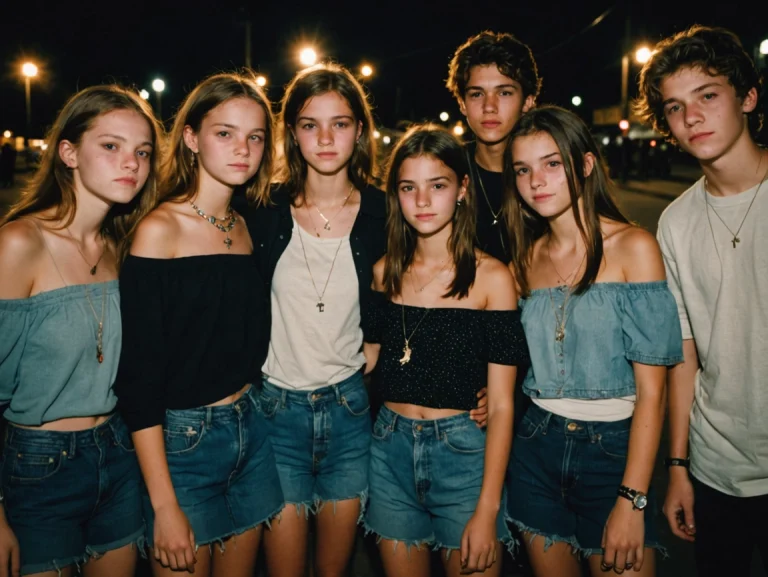
The small, slightly grainy digicams that used to sit in drawers ten years ago are suddenly back in people’s hands.
Instead of perfectly edited photos, teenagers are posting pictures with:

  • blown-out flash
  • soft blur
  • chaotic lighting

Ironically, the less “perfect” the photo looks, the better.
After years of ultra-filtered Instagram feeds, the digicam revival feels like a quiet rebellion against over-polished internet aesthetics.


The Quiet Fall of Labubus

For a moment, Labubus were everywhere.
On bags.
In Instagram videos.
In unboxing clips.

They became one of those internet trends that appeared overnight and spread everywhere before most people even understood why.
But like most hyper-viral objects, the excitement faded just as quickly.

The Labubu phase might already be ending — a reminder that internet culture now moves so quickly that trends can rise and fall within a single year.


Maximalism Is Creeping Back

For years, minimalism dominated teen aesthetics.
Neutral colours.
Clean outfits.
Simple everything.

But recently, the opposite energy has been creeping back in.
Chunky jewellery.
Layered outfits.
More colour.
More personality.

It’s not chaotic maximalism — but it’s definitely less restrained than the hyper-minimal era that came before it.


The Death of the Crop Top?

This might be controversial.

But compared to just a few years ago, crop tops seem to be slowly losing their monopoly on teen fashion.
Oversized silhouettes, layered outfits, and off-shoulder styles are starting to replace the ultra-fitted look that dominated the early 2020s. Fashion cycles are strange like that.
Something that feels permanently trendy can quietly disappear almost overnight.


The Bigger Shift: A More Aware Generation

The most interesting trend of 2026 isn’t fashion at all.
It’s attitude.
Teenagers today seem far more politically aware and socially outspoken than people their age were even five years ago.
Whether it’s global conflicts, climate issues, or education systems, young people are increasingly comfortable sharing opinions online.
Teen culture is no longer just about trends and aesthetics.
It’s also about voices.
And in many ways, that might be the defining shift of this generation.


What This All Means

Looking at these trends together, a pattern appears.
2026 teen culture seems to be moving away from perfectly curated aesthetics and toward something more expressive, slightly chaotic, and a little more honest.
Grainy photos instead of polished ones. Layered outfits instead of hyper-minimal ones. Opinions instead of silence.

In other words, the vibe of 2026 might simply be this:
Less perfection. More personality.

The Hobby Gap: Why Every Teen Needs Something That Isn’t an Exam

0

If you ask most teenagers what their hobbies are, the answers have started to sound strangely similar.

“Scrolling.”
“Watching shows.”
“Listening to music.”

None of these are bad things.

But they’re also not quite hobbies.

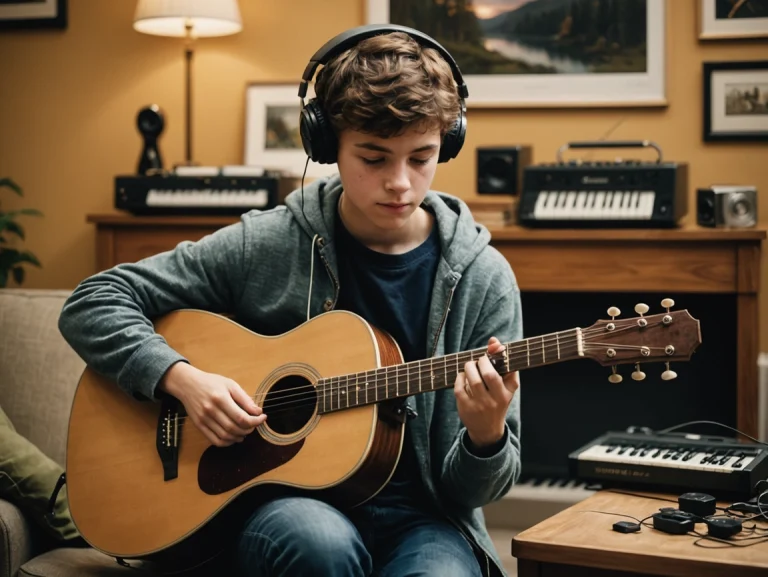
Somewhere along the way, many teenagers stopped having activities that exist outside of school and outside of the internet.

And the timing of this shift couldn’t be worse.

Because the moment Class 10 ends, life suddenly becomes surrounded by acronyms.

JEE.
NEET.
CUET.
SAT.
AP.
CLAT.

Entire coaching industries appear overnight, and suddenly it feels like every hour of your day is supposed to be “productive.”

In that kind of environment, hobbies start to feel like luxuries.

But ironically, they might be exactly what teenagers need the most.


The Pressure Bubble

For many students entering Class 11 or leaving school after Class 12, the next few years become incredibly focused.

Entrance exams.
Applications.
Career decisions.

The pressure slowly builds, not because anyone forces it directly, but because everyone around you seems to be preparing for something big.

Without something outside that system, life can start to feel like one long preparation cycle.

Study. Test. Repeat.

This is where hobbies quietly become important.

They create a space where nothing is being evaluated.

No marks.
No rankings.
No competition.

Just curiosity.


The “Too Late” Myth

One reason many teens avoid starting hobbies is the belief that it’s already too late.

If you didn’t start learning guitar at 7 or playing chess at 10, it feels like you’ve missed the window.

But most hobbies don’t actually work that way.

The internet has quietly changed the rules.

Today you can learn almost anything online:

  • musical instruments
  • photography
  • digital art
  • video editing
  • coding
  • creative writing

Many skills that once required expensive classes or mentors are now accessible from a laptop.

The barrier isn’t opportunity anymore.

It’s simply the belief that starting late somehow makes it pointless.


The Power of Niche Interests

There’s another interesting thing about hobbies.

The more unusual they are, the more they shape your identity.

When everyone around you is focused on exams and applications, having something different — something you chose purely out of curiosity — can feel surprisingly meaningful.

It becomes a reminder that you’re more than just a student preparing for the next test.

You’re someone with interests, creativity, and a life outside the academic system.


The Quiet Benefit of Hobbies

The most valuable part of a hobby isn’t mastery.

It’s balance.

Having something that exists purely because you enjoy it can make stressful periods feel more manageable.

It gives your brain a place to go when everything else feels overwhelming.

And sometimes those interests grow into things you never expected — new communities, new skills, or even future opportunities.


The Real Point

Teenagers today are growing up in one of the most competitive academic environments in history.

Preparation starts earlier. Expectations feel higher.

In that kind of world, hobbies might look small.

But they’re actually one of the few spaces where teenagers can explore something without pressure or performance.

And that might make them more important than ever.

The “Insta-Lies” Report: Famous Spots That Are Actually Mid (And Where to Go Instead)

0

This is the ultimate “vibe check” for your travel section. In 2026, the “Touch Grass” movement is trending on TikTok, and Gen Z is officially over the manufactured perfection of influencer culture.

Here is the draft for Inktrove.


The “Insta-Lies” Report: 4 Famous Spots That Are Actually Mid (And Where to Go Instead)

We’ve all seen the reel: a girl in a flowing dress, standing alone at a marble gate with a perfect reflection of the sky beneath her. No crowds, no noise, just “main character” energy.

But here is what the 15-second clip doesn’t show: the 4-hour queue in the heat, the guy holding a literal mirror under a phone camera to fake a lake, and the 500 other people breathing down your neck. In 2026, we’re calling it out. Here are the most overrated spots on your feed right now and the “low-key” alternatives that actually live up to the hype.


1. The Gates of Heaven, Bali (Pura Lempuyang)

The Insta-Lie: A serene, spiritual gateway over a reflective lake. The Reality: There is no water. That “lake” is a trick played by local photographers holding a piece of glass under your iPhone. You’ll likely wait 3 to 5 hours for a 30-second photo op while a guy shouts “Next!” every few seconds.

Go here instead: Sidemen Valley, Bali. It’s what Ubud used to be 10 years ago. Think lush green rice terraces, authentic homestays, and zero queues. You get the same Mt. Agung views without the circus.


2. The Oia Sunset, Santorini

The Insta-Lie: A romantic, quiet evening overlooking blue-domed churches. The Reality: It’s basically a mosh pit with better architecture. By 5:00 PM, the narrow alleys are so packed with cruise ship tourists that you can barely move. You’ll be watching the sunset through the screen of the person’s phone in front of you.

Go here instead: Milos, Greece. It has the same volcanic “moonscape” vibes and whitewashed villages but at half the price. Head to Sarakiniko Beach at sunrise; it feels like another planet, and you’ll actually have space to breathe.


3. The Mona Lisa, Paris (The Louvre)

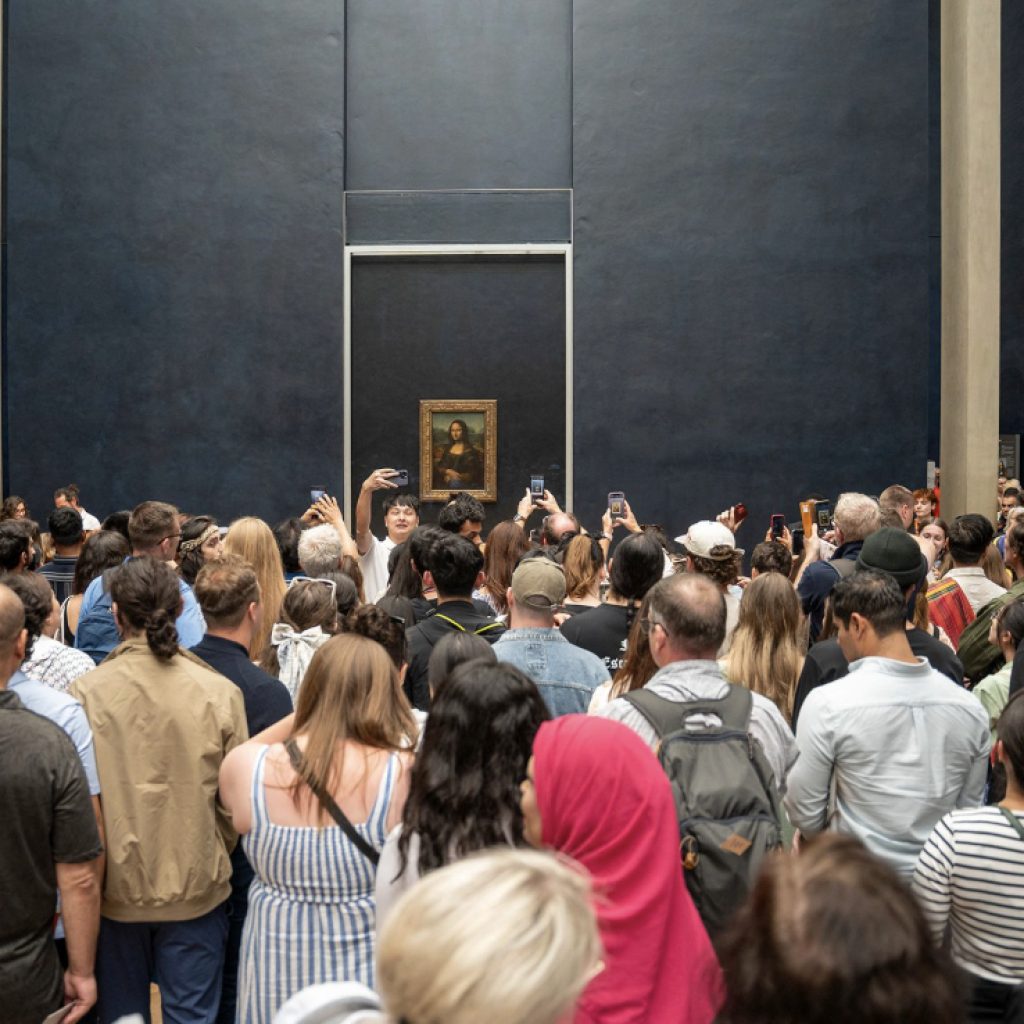
The Insta-Lie: A profound, face-to-face moment with the world’s most famous smile. The Reality: Imagine a tiny, glass-encased postcard 20 feet away from you, guarded by a sea of selfie sticks. You get about 45 seconds to look at it before security ushers you along.

Go here instead: Musée d’Orsay, Paris. Just across the river, this converted train station holds Van Gogh’s Starry Night and massive Monet canvases. The light is better, the building is cooler, and the vibe is actually “Art,” not “Amusement Park.”


4. The “Tulum Aesthetic,” Mexico

The Insta-Lie: An eco-chic paradise of jungle swings and organic smoothie bowls. The Reality: In 2026, Tulum is struggling. It’s overpriced, the traffic is a nightmare, and the “eco-friendly” hotels are often running on loud diesel generators. Plus, the seaweed (sargassum) on the beaches can get… fragrant.

Go here instead: Bacalar, Mexico. Known as the “Lagoon of Seven Colors,” this freshwater lake is crystal clear and stunningly blue. It’s quiet, sustainable, and has the laid-back Mexican soul that Tulum lost years ago.


How to Avoid the “Mid” Trip in 2026

If you’re planning a trip, follow these three rules to ensure you aren’t just paying for a photo:

  1. Check the “Tagged” Photos: Don’t look at the official gallery. Look at the tagged photos on Instagram to see what people actually look like there (sweaty, crowded, and frustrated).
  2. The 20-Minute Rule: If a spot is famous, walk 20 minutes in any direction away from it. That’s where you’ll find the best food and the real views.
  3. Read the 3-Star Reviews: 5-star reviews are often fake; 1-star reviews are often just people complaining about the weather. 3-star reviews tell you the honest truth about the crowds and prices.

The Bottom Line

Travel is about the feeling, not the filter. Don’t spend your gap year (or your savings) chasing someone else’s highlight reel.

Red Skies: How the Iran-USA Conflict is Rewriting the Rules for International Students

0

The notifications started hitting our phones at 3:00 AM. In the last 48 hours, the “shadow war” between Iran and the United States has broken out into a direct confrontation. While the headlines focus on naval movements in the Strait of Hormuz, thousands of students are staring at their study-abroad dreams and wondering: “What happens to my visa now?”

For the international student community in 2026, a conflict of this scale isn’t just a news story—it’s a logistical nightmare. From soaring airfares to the fear of “Cold War 2.0” academic bans, here is how the Iran-USA war is affecting us.


1. The “Oil Effect”: Why Your Plane Ticket Just Doubled

The first casualty of any Middle Eastern conflict is fuel. With the Strait of Hormuz—the world’s most important oil chokepoint—becoming a combat zone, global oil prices have spiked.

  • Aviation Surcharge: Airlines are already rerouting flights to avoid the airspace over the Persian Gulf. This means longer flight times and massive fuel surcharges.
  • The Student Budget Crisis: If you were planning to fly to the US, UK, or Europe this fall, your “budget” ticket might now cost as much as a semester’s tuition.

2. Visa Delays and “Security Screenings”

History shows that when geopolitical tensions rise, borders tighten.

  • Enhanced Vetting: Students from countries seen as “neutral” or “aligned” may face longer administrative processing times. We are already seeing a spike in Form DS-160 delays for STEM students.
  • The Tech Fear: In 2026, the US is hyper-sensitive about “dual-use technology.” If you are studying AI, Nuclear Physics, or Aerospace Engineering, expect your background checks to go from weeks to months.

3. The Currency Crash: Can You Still Afford Tuition?

War creates market panic. As investors rush to the “safety” of the US Dollar, local currencies like the Indian Rupee (INR) or the Turkish Lira are taking a hit.

  • Exchange Rate Shock: If the Dollar strengthens against your home currency, your tuition fees effectively increase overnight.
  • Inflation at Home: The cost of living is rising globally due to energy costs. Parents who were sponsoring their children’s education are now facing tighter margins at home.

4. On-Campus Safety and Global Sentiment

Geopolitics often bleeds onto university campuses. In 2026, we are seeing a polarized environment.

  • Student Activism: Universities in the US and Europe are becoming hubs for protests. While academic freedom is a right, international students on F-1 or J-1 visas need to be extremely careful about legal boundaries.
  • Mental Health: It is hard to focus on a CUET 2026 prep guide or an Economics mid-term when your home region is in a state of war. Universities are beginning to roll out “Conflict Support Groups” for affected students.

How to Protect Your Future During the Conflict

  1. Freeze Your Forex: If you have tuition due, look into “Forward Contracts” to lock in an exchange rate before the currency fluctuates further.
  2. Apply Early: If you are targeting the Fall 2026 intake, submit your visa documents now. Do not wait for the “rush” while embassies are understaffed or distracted.
  3. Stay Neutral Online: It sounds harsh, but in 2026, digital footprints are part of visa screenings. Be mindful of how you engage with sensitive political content on public platforms.
  4. Have a Plan B: Consider “Education Hubs” like Singapore, Australia, or even top-tier Indian universities as a backup in case Western travel becomes restricted.

The Bottom Line

The Iran-USA conflict is a reminder that the world is smaller than we think. While we can’t control the missiles, we can control our preparation. Stay informed, stay focused on your credits, and keep a close eye on Inktrove’s updates as the situation evolves.

CUET 2026 for Dummies: Everything You Need to Know (Before You Panic)

0

If you’re in 12th grade right now, you’ve probably heard the acronym “CUET” more times than your own name. Your teachers are stressing, your parents are confused, and your coaching center is acting like it’s the end of the world.

But let’s strip away the noise. The Common University Entrance Test (CUET) 2026 is not just another exam—it is the gateway to nearly every top central university in India (DU, BHU, JNU, you name it).

If you’re feeling clueless, don’t worry. This is the “no-nonsense” breakdown of how to win the CUET game without losing your mind.


1. The Structure: It’s a 3-Course Meal

CUET isn’t one long paper. It’s broken into three distinct sections. Think of it like a menu where you have to pick the right combination to satisfy the university you want.

  • Section IA & IB (Languages): Usually, you pick English or Hindi. The secret? They aren’t testing your knowledge of literature; they are testing Reading Comprehension and Vocabulary.
  • Section II (Domain Subjects): This is the “meat.” You pick subjects you studied in 12th grade (Physics, Accounts, History, etc.). Pro-Tip: You can only pick subjects you had in 12th—don’t try to be a hero and pick something new!
  • Section III (General Test): This is the optional “side dish.” It covers GK, Current Affairs, and basic Math. Many BA and Vocational courses require this.

2. The “Best of Five” Myth vs. CUET Reality

In our previous article about the 6th subject scam, we talked about how Physical Education can boost your Board percentage. Crucial Update for 2026: While PE helps your Boards, most top-tier CUET courses (like B.Com Hons at SRCC) specifically look at your core Domain scores.

Don’t let your “easy” subjects make you lazy. Your core subjects (the ones you might be tempted to use leaked papers for—don’t do it!) are what will actually get you into a top college.


3. The 2026 Strategy: Accuracy Over Speed

CUET is a Computer Based Test (CBT) and it has Negative Marking.

  • +5 for every correct answer.
  • -1 for every wrong answer.

In 2026, the competition is so tight that even a -2 can drop your rank by 5,000 students. If you aren’t 80% sure, skip it.


4. Why NCERT is Still King

The biggest mistake students make in 2026? Buying 10 different “CUET Special” guidebooks. The Truth: 99% of the questions are pulled directly from NCERT Class 12 textbooks. If you know your NCERT diagrams, “box” info, and summary points, you are already ahead of the person spending ₹50,000 on coaching.


5. Using AI to Prep (The Smart Way)

You don’t need a personal tutor. Use NotebookLM to upload your NCERT PDFs and generate “Mock MCQs” for yourself. It’s the fastest way to find your weak spots without spending a rupee.

The CUET 2026 Checklist:

  • [ ] Check the specific subject requirements for your dream course on the official Samarth portal.
  • [ ] Ensure your 12th-grade subjects match your CUET Domain picks.
  • [ ] Start practicing 15 minutes of “Daily Vocabulary” for the Language section.

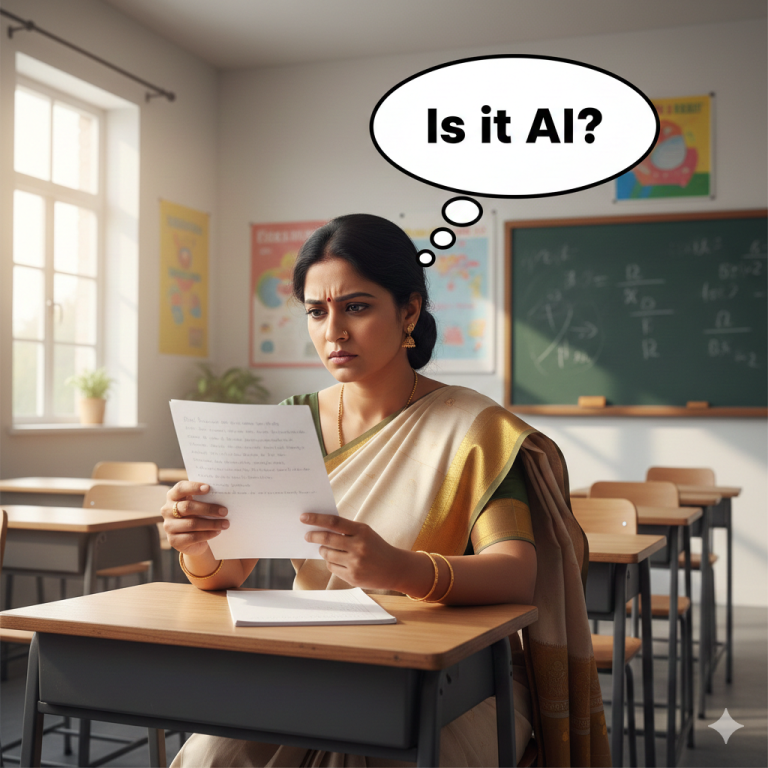
The AI-Spy War: Why Your “Undetectable” Essay Just Got Flagged

“I used a bypasser. I even changed every third sentence manually. And it still came back with a ‘90% AI Probability’ comment in red ink.”

My friend Ishaan was staring at his English Literature assignment like it was a crime scene. In 2024, using ChatGPT was like having a secret superpower. In 2026, it feels like playing Minesweeper with your GPA. The “AI-Spy War” is officially in full swing, and right now, the teachers are winning.

But how? If you aren’t just copy-pasting, how are they catching you? Let’s look at the tech behind the curtain.


The “Fingerprint” You Didn’t Know You Left

Most students think AI detectors look for “robotic” words. While that’s partly true, modern tools like Turnitin’s 2026 AI Suite and GPTZero use two secret metrics: Perplexity and Burstiness.

  • Perplexity: This measures how “random” your word choices are. AI is predictable; it chooses the most statistically likely next word. Humans are “high perplexity”—we use weird adjectives and irregular sentence structures.
  • Burstiness: Humans write in “bursts.” We might have a long, flowy sentence followed by a short, punchy one. AI tends to keep a very consistent, rhythmic sentence length.

When your essay has low perplexity and low burstiness, the detector’s “AI Alarm” goes off, even if you’ve swapped a few words.


Why “Bypassers” and “Spinners” are a Trap

If you’ve spent time on Reddit, you’ve seen the ads for “AI Humanizers” or “Stealth GPT.” These tools take AI text and scramble it to bypass detectors. Here’s the problem: Teachers have eyes.

In 2026, AI-scrambled text often results in “Word Salad”—sentences that are technically grammatically correct but sound like they were translated through five different languages. When a teacher sees a student who usually speaks in slang suddenly writing about “the quintessential paradigm of socio-economic constructs,” they don’t need a detector to know something is up.


The New “Snitch” Tech: Watermarking

This is the scary part. Major AI companies have started implementing Digital Watermarking. This isn’t a visible mark; it’s a pattern in the word choices that is invisible to the human eye but instantly recognizable to a detection bot.

If you generate a full essay in 2026, there’s a high chance the “DNA” of that AI is baked into the text. No amount of “rephrasing” can easily strip that out without rewriting the whole thing—at which point, you might as well have just written it yourself.


How to Use AI Without Getting “Caught” (The Ethical Way)

The goal shouldn’t be to let AI write for you; it should be to let AI think with you. Here is how to stay safe in the AI-Spy War:

  1. The Outlining Trick: Use AI to create the structure. Ask it for a 5-point outline, then write the actual content in your own voice. Detectors can’t flag an outline.
  2. The “Source-First” Method: Instead of asking for an essay, feed the AI your research notes and ask it to find gaps in your argument. We’ve talked before about using NotebookLM for grounded research—this is the gold standard for staying “human.”
  3. Personal Anecdotes: AI doesn’t have a life. It hasn’t seen the rain in Mumbai or felt the stress of a Delhi Metro commute. Adding personal stories is the only 100% “Undetectable” shield.

The Bottom Line

The “AI-Spy” War isn’t about banning technology; it’s about outgrowing the “copy-paste” phase. If you’re struggling with the workload, don’t risk your reputation on a “Stealth” bot. Check out our guide on Managing Exam Stress instead.

In 2026, the best “bypass” is actually having an original thought.

I Fell for a “Leaked” Science Paper: Here’s How to Spot the Fakes Before You Fail

0

“Bro, check your phone. NOW.”

The message from my best friend, Rahul, lit up my screen at 11:42 PM. I was halfway through a bag of chips and a desperate attempt to understand Optical Instruments. I opened the PDF he sent. It was blurry, stamped with a “Confidential” watermark, and looked like it had been photographed in a basement.

Rahul: “My cousin in the Delhi zone sent it. He says it’s the exact set we’re getting tomorrow. 100% legit.”

Me: “Are you sure? This looks sketchy.”

Rahul: “Suit yourself. I’m closing my books and just memorizing these 30 questions. See you at the top of the toppers list!”

My heart started thumping. The “shortcut” was sitting right there. I closed my NCERT textbook. I felt this incredible rush of adrenaline—like I’d just won the lottery without buying a ticket.


The Midnight “Mug-Up” Session

For the next four hours, I wasn’t studying; I was data loading. I didn’t care why a concave lens formed a virtual image; I just memorized that Question 14 said the answer was ‘Option B’.

I rehearsed the diagrams, the specific numerical values, and the long-form answers until I could recite them in my sleep. I felt invincible. While the rest of the country was struggling with the syllabus, Rahul and I had the “cheat codes.”


The 10:15 AM Reality Check

Standing outside the exam hall, Rahul and I gave each other a smug high-five. We weren’t nervous. We were actually excited.

“Question 4 is the one about the AC Generator, remember?” Rahul whispered as we walked to our desks. I nodded, smiling. We sat three rows apart.

The invigilator walked in. The seal of the paper was broken. The booklets were handed out. I didn’t even read the instructions. I flipped straight to Section A.

My stomach dropped into my shoes.

Question 1 wasn’t about the Wheatstone Bridge. It was a complex case study on Wave Optics that I hadn’t looked at in months. I frantically flipped to Section C. Nothing. Not a single diagram, not a single numerical value from the “leak” was there.

I looked over at Rahul. He had turned a ghostly shade of white. He looked at me, his eyes wide with pure terror, his pen shaking. In that split second of eye contact, we both realized the truth: We had spent the night memorizing garbage, and now we were going to fail.


How to Identify a Fake Science Paper Leak (Before You Waste Your Night)

Don’t let the “midnight rush” cloud your judgment. Use this checklist to identify a fake science paper leak before you close your books:

  • The Font Test: Official CBSE/Board papers use very specific, professional typography. If the “leak” looks like it was typed in Word with weird formatting or “fancy” fonts, it’s a fake.
  • The “Forwarded” Curse: If a paper is circulating on WhatsApp with a “Forwarded many times” tag, it’s likely a viral hoax used by scammers to get clicks or group joins.
  • Missing QR/Barcodes: Modern 2026 exam papers have unique, encrypted tracking codes on every page. Most fakes are just photos of old papers with the year “2026” photoshopped at the top.
  • The “Too Good to be True” Questions: If the paper only contains the “most popular” questions from previous years, it’s likely a student-made “guess paper” being sold as a leak.

The Aftermath: Why Shortcuts Don’t Work

I spent that three-hour exam in a state of mourning. I scraped together every bit of knowledge I had from 10th grade and pre-boards just to fill the sheets. It was the most humiliating experience of my life.

In 2026, the board has multiple sets and “Parallel Papers” to prevent exactly what I tried to do. Instead of looking for leaks, use tools that actually help. I eventually saved my grades by using NotebookLM for focused revision and stopped relying on WhatsApp rumors. If your marks are low, consider a legitimate buffer like Physical Education as a 6th subject rather than a scam that could get you blacklisted.

The Bottom Line

If a paper lands in your inbox tonight, delete it. The 15 minutes of “excitement” isn’t worth the three hours of silent screaming in the exam hall. Trust your prep, not the PDF.